Example project · AI animated short film
How we made a 3‑minute AI animated short film from a script
We wrote a script for a short film of our own: eight scenes, five characters who talk to each other and 33 lines of dialogue. Vividemo designed the cast and the sets, animated the shots with Seedance 2.5, scored and cut the film, then reworked the sound after two rounds of notes.
- Film length
- 3:03
- Shots in the final cut
- 26
- Script to first cut
- 2 h 11 min
- Credits used
- 11,576
What the brief asked for
We wanted a short brand film of our own, so we wrote the whole thing first: a story about a little monster who wants to land on the moon, every scene and every line. The brief that went with the script set the rules below.
Story
- Eight scenes, about 190 seconds
- Five talking characters and three block movers who don't talk
- Every line spoken on screen, no narrator
Look and sound
- Stylized 3D: matte plastic, painted metal, paper
- Seedance 2.5 for the animation
- Original music that stays under the dialogue
Delivery
- 16:9, 1920×1080, 24 fps
- English subtitles, a cover and production notes
- End card: Vividemo / Your idea. Now playing.
The script, scene by scene
Eight scenes and 33 lines of dialogue, as they play in the finished film. Choose a frame to watch that scene.
Scene 1
A sketch comes to life
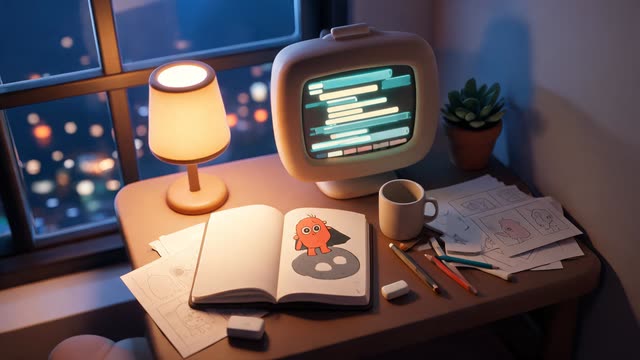
A pencil finishes a doodle of a little monster in a cape on the moon. The creator walks away, and the drawing pulls its legs out of the page as Pip.
- Pip That's me.
- Pip Mostly.
Scene 2
What are we making?
Pip drags his storyboard into a busy studio and pitches his film to the director.
- Director What are we making?
- Pip A space epic. Huge moon. Heroic landing. Me.
- Director Have you done this before?
- Pip I was drawn this morning.
- Director Okay. Let's make it.
Scene 3
Hero gear
Pip asks for a longer cape, trips over it, and gets a shorter one.
- Pip Longer. Heroes have long capes.
- Costumer Heroes also have longer legs.
- Pip That was a rehearsal.
- Camera operator Good. Because I recorded it.
- Costumer Try that.
Scene 4
The moon doesn't fit
The crew builds the set until a giant moon gets stuck in the doorway.
- Robot Moon delivered. Door incompatible.
- Director How big did you order it?
- Pip I said “unforgettable.”
- Robot Correct. It will remain in this doorway.
- Director All right. Bigger door.
Scene 5
Bigger door
The whole studio unfolds into a stage with the Earth and the moon. The robot brings helmets.
- Robot Small, medium, or heroic?
- Pip Heroic.
- Pip …Small.
Scene 6
The first step
On the jump platform, Pip loses his nerve. The director doesn't rush him.
- Director You okay?
- Pip Yep. Just checking the… space.
- Pip What if I don't look like a hero?
- Director What does your hero do?
- Pip He jumps.
- Director We're ready when you are.
Scene 7
The take
Pip jumps, lands on the moon and gets back up. The crew watches the take on the monitor.
- Director Cut!
- Pip That's… me?
- Camera operator First take.
- Pip I almost fell.
- Director But you got up.
Scene 8
The next idea
Pip already has a sequel. The film returns to the creator's desk, then the end card, then one last block mover.
- Pip For the sequel, I'm thinking dragons.
- Robot I'll measure the door.
How it was made
- The cast and the sets came first. Before any animation, Vividemo made reference images for Pip (with and without his cape and helmet), the director, the robot, the costumer, the camera operator, the three block movers and every location. Every shot was then generated from these same images rather than from a fresh description.
- Each scene became short shots. The lines for each shot were written into its prompt, and Seedance 2.5 generated the picture together with the characters' voices and the sound, so the mouths move with the words.
- A rough cut came before the finish. A first assembly of the whole film, with labeled placeholders where moments were still missing, showed what was left to make. Only those moments were generated next, and the jump became several short shots: the leap, the landing and the hero pose.
- Score, end card and export. An original score runs under the dialogue, the end card is typeset rather than generated, the subtitles are timed to the lines, and the film was upscaled from Seedance's 720p to 1080p.
The designs every shot was made from
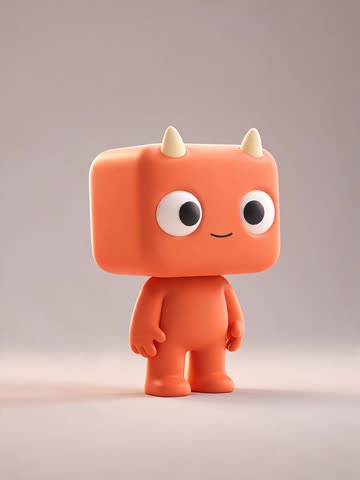
Pip 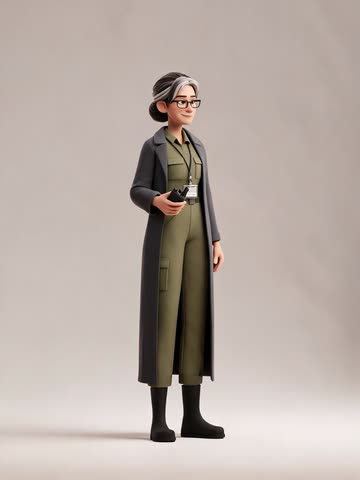
The director 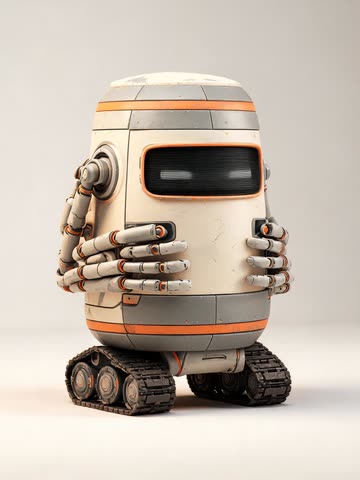
The robot 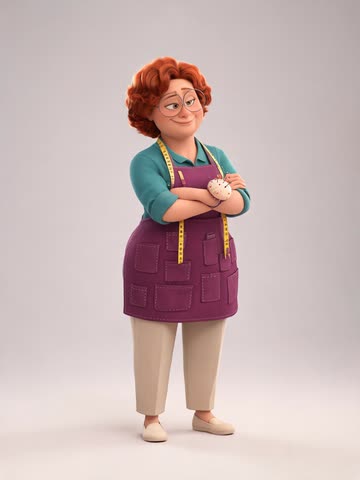
The costumer 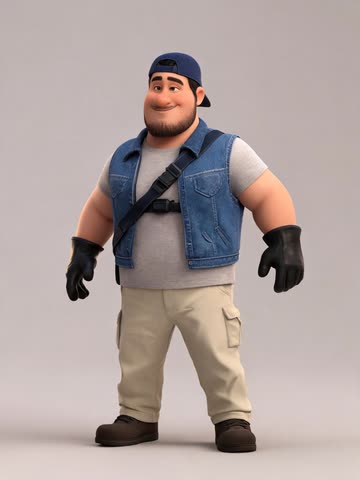
The camera operator
The creator's desk 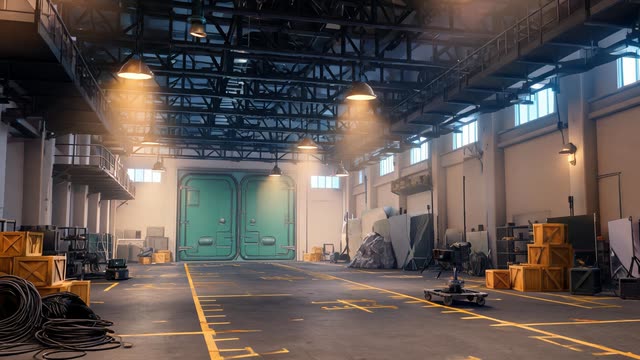
The studio hall 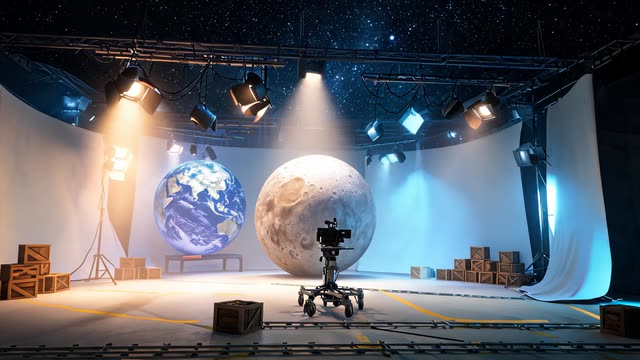
The stage 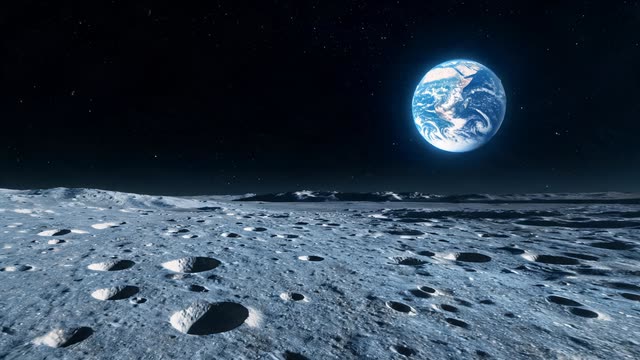
The moon
One shot's prompt, exactly as it was sent
Every shot started as a prompt like this one, written by Vividemo for Seedance 2.5. This one made the 12-second conversation on the jump platform in scene 6. Each “Image” is a design like the ones above, and each “Audio” is a voice clip of Pip or the Director.
Stylized 3D animated feature, matte plastic, painted metal, glass and cloth, clean rounded shapes, cinematic stage light, limited palette of coral orange, mustard, teal-green, cream and deep space blue, mild film grain, intimate comedy. No on-screen text, no subtitles, no logos, no watermarks.

Image 1 defines the opened stage: starry void above, giant grey moon prop, glowing blue earth disc, high jump platform with a start mark. Image 2 defines Pip: knee-high coral-orange monster, cube head, two tiny horns, short legs, fitted clear bubble helmet, short mustard cape that hangs behind the body; the front, sides, arms and both legs stay visible. Image 3 defines the Director: tall lean woman, silver-streaked bun, rectangular glasses, long charcoal coat over an olive jumpsuit. Image 4 defines the Camera Operator (stocky man, backwards navy cap, denim vest). Image 5 defines the Costumer (round woman, auburn curly bob, round glasses, plum apron). Image 6 defines the studio robot (cream-and-grey drum body, dark visor, six arms, black treads). Audio 1 and Audio 3 are Pip's voice; Audio 2 and Audio 4 are the Director's voice.

An intimate pre-jump conversation on the stage platform, with clean shot-reverse cuts. Stay in the stage; the moon and earth are visible as large set pieces behind the platform.
0-4s: medium close-up of Pip in the helmet, small and nervous, holding a crumpled storyboard. Pip says quietly, "What if I don't look like a hero?"
Cut to the Director. She glances at the storyboard, then asks gently, "What does your hero do?"
4-7s: cut to Pip, who looks down at the drawing of itself jumping on the moon. Pip says, quietly, "...He jumps."
7-9s: cut to the Director. She gives a small nod and steps back, saying, "We're ready when you are."
9-12s: cut to the crew behind her on the stage: the Camera Operator gives a confident thumbs-up, the Costumer nods, the robot raises several thumbs while holding a coffee cup. Pip takes a breath, turns back toward the start mark, and sets its feet.

Camera: intimate close two-shots at Pip's eye level, then a wider shot of the crew on the stage, ending behind Pip. Keep the fitted helmet, short cape hanging behind the body, coral skin, the Director's coat and glasses, and the crew's outfits consistent. Sound: quiet stage room tone, a breath, cloth movement, natural American English dialogue with real pauses, no music, no subtitles.- Style. The look of the whole film, repeated in every shot, and no text or subtitles in the picture.
- References. What each of the six attached images shows, and which attached voice clips belong to which character, so each character keeps the same voice from shot to shot.
- Beats. The 12 seconds split into four timed beats, with every line written out and who says it.
- Camera. Close shots at Pip's eye level, then the crew, ending behind Pip as he faces the jump.
- Consistency. What must not drift from the designs: the helmet, the cape hanging behind, the costumes.
- Sound. Room tone, a breath and dialogue with real pauses. No music, because the score goes on in the edit.
| Part of the film | Made with |
|---|---|
| Character and set designs | Seedream 5.0 Lite |
| The animated shots, with the characters' voices and sound | Seedance 2.5 |
| Voice recordings of the lines, used for the first cut and to replace four lines where a shot got the words wrong | ElevenLabs v4 |
| Original score | ElevenLabs Music v2 |
| End card and cover | HyperFrames |
| Editing, mix, subtitles and the 1080p export | FFmpeg |
Two rounds of notes
After the first cut we sent two notes, about the sound and one shot. Neither needed new animation: both were changes to the edit and the mix.
Note 1
The music is too loud. Can you use the videos' own sound and background noise instead? And the picture looks distorted around 2:45.
What changed
- The music came down by about 5 dB and the shots' own room tone and movement sounds were mixed in.
- The shot at 2:45 had been stretched to fill the 16:9 frame. It was recropped instead, so the director's face is no longer squashed.
3.5 minutes · 4 credits
Note 2
Around 1:00 the lines come late. The generated clip has them in sync, so the cut must be the problem. Build the film on the clips' own audio, keep the music as quiet as possible, and fade it in at the start and out at the end.
What changed
- The first cut placed each line from a separate voice recording, and at 1:00 it landed about 1.8 seconds off the mouths. The film was rebuilt on the audio Seedance generated with each shot, so every line sits where it was spoken.
- The music became a quiet bed, with a 12-second fade-in and an 8-second fade-out.
- Where a shot's own audio was wrong (a line said twice, a dropped word, “duel” instead of “door”), the extra line was cut and four lines were replaced, at the same moments, with the voice recordings made for the first cut.
6 minutes · 5 credits
What it took
Credits used by this project
11,576
- Animated shots (Seedance 2.5, 25 generations)
- 11,096 credits
- Original score (2 versions)
- 285 credits
- Character, set and reference images (18)
- 126 credits
- The agent's planning, editing and checks
- 55 credits
- Voice lines
- 14 credits
Almost all of it went to animation: 25 Seedance generations for three minutes of film. The two rounds of notes cost 9 credits together, because they changed only the edit and the mix. Most of the cost follows how many seconds of animation are generated, so a shorter film, or fewer shots made twice, uses fewer credits. Plans and credit packs are on the pricing page.
How long it took
Vividemo worked on the film for 2 hours 11 minutes before delivering the first cut, then 3.5 and 6 minutes on the two rounds of notes. That is working time only: it leaves out pauses while the project waited for a reply, and time lost to a platform outage that has since been fixed.
What was delivered
An MP4 (3:03, 1920×1080, 24 fps, H.264 with AAC audio), English subtitles with all 33 lines, a cover image and production notes. Seedance renders at 720p, so the film was upscaled to 1080p in the final export.
Make your own animated short
Send your script, or just the idea, and say who the characters are, how long it should run and how it should look. Vividemo designs the cast before animating anything, and when you send notes it redoes only the shots or the part of the mix they are about. You get an MP4 with subtitles.
MAKE IT BIG is an original Vividemo film. The Vividemo team wrote the script for this example; the characters, sets, animation, voices and music were made in Vividemo.