A hot street. A turning desk fan. Then a pause: ice in a glass, coffee pouring, and a bottle of SLOWDAY in cool light.
This concept ad began with two uploads: a product image and a short brand brief. Vividemo developed the creative direction, planned the shots and music, generated the footage, and assembled the film. We reviewed the direction, chose which shots to retry, and used two rounds of feedback to develop the sound.
Here's the process, including the prompts and the changes that shaped the result.
Start with the product and the feeling
SLOWDAY is a fictional cold brew coffee brand created for this example. Its packaging is simple: an amber glass bottle, a black cap, and an ivory label with deep teal lettering.
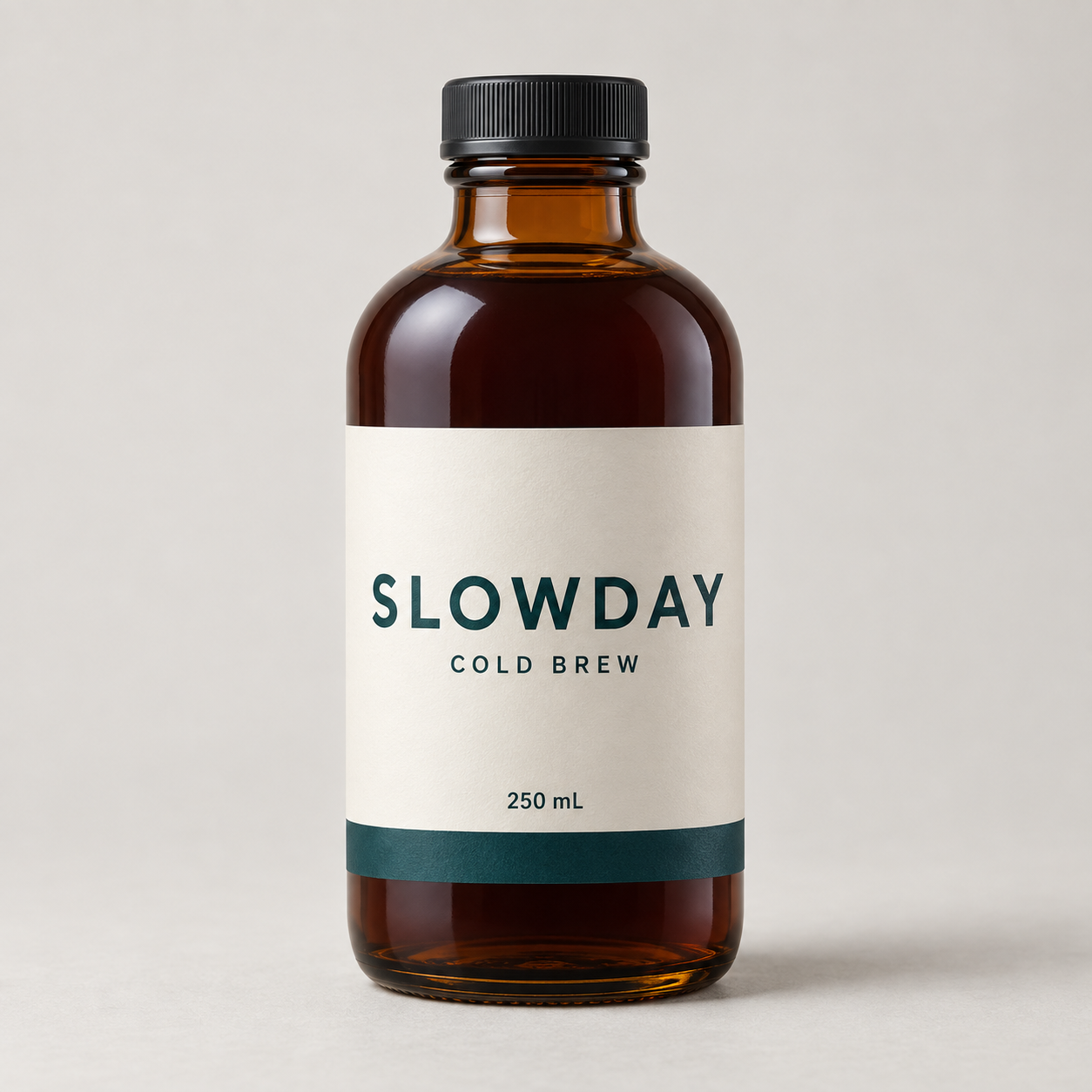
We uploaded:
- One front-facing product image to establish the bottle, packaging, and label.
- One product brief with the brand name, 250 mL size, intended audience, and the idea “A moment to slow down.”
We supplied no video footage or audio. The brief also defined the limits of the product information: no invented origin story, ingredients, certifications, or health claims.
For your own project, start with a clear product image and the facts you want the video to communicate. Add the audience, intended use, and the feeling you want viewers to leave with.
Download the SLOWDAY starter materials
Give Vividemo room to develop the idea
We used this prompt:
Create a 25–30 second, 16:9 English video ad for SLOWDAY, a fictional cold brew coffee brand, using the attached product image and brief.

The idea is "A moment to slow down" — a refreshing pause in a busy summer day. Make it feel polished, distinctive, and suitable for the Vividemo website portfolio.

Keep the product appearance consistent with the reference and use only the supplied product facts. Take the creative lead on the story, visuals, pacing, and sound. Share your proposed direction before producing the video.
The prompt set the outcome and the boundaries. Vividemo chose how to tell the story.
Its recommendation was a film led by mood and music, without voiceover. The available product information supported a sensory story: the pace and heat of the day giving way to a quiet coffee ritual. The packaging supplied the visual palette—amber, ivory, deep teal, and black.
We approved that direction and asked Vividemo to bring the concept and storyboard back together for one review before production.
Review the story before generating the shots
Vividemo developed the concept “Stillness, earned.” It planned a 28-second film with a clear change in pace:
| Time | Story beat |
|---|---|
| 0–6 seconds | A busy summer opening: sunlit street, desk fan, and passing traffic through a bus window. |
| 6–9 seconds | A pause in cool daylight, with a drifting curtain and a waiting glass. |
| 9–17.4 seconds | The coffee ritual: ice, pouring, stirring, and lifting the glass. |
| 17.4–18.6 seconds | A brief hold on the glass and tabletop. |
| 18.6–22.6 seconds | The bottle reveal and a close detail of the label and glass. |
| 22.6–28 seconds | The tagline and closing product image. |
The proposal included an original instrumental track, a shot plan, and previews of the product frames and text cards. The product image anchored the bottle shots, while the tagline and end card were typeset separately to keep the wording clear.
At this stage, our job was to judge whether the story felt right for the brand. Once it did, the instruction was simple:
Approved, start productionFix the shots that need another attempt
The first production pass needed revisions. Vividemo flagged two important problems:
- The opening looked too dark. It suggested evening instead of a bright summer day.
- The main bottle shot moved too close. The label became cropped, and the background showed visible seams as the framing changed.
It showed the attempts, explained the problems, and recommended retrying those two shots. We replied:
Retry the hero and openingVividemo revised the bottle's starting frame and motion instructions and regenerated the selected shots. The next opening was brighter, and the bottle shot held its framing with the label visible.
We continued with the other shots, including two weaker details that Vividemo had disclosed: dark framing around the bus window and a soft, out-of-focus spoon in the stirring shot. That was a choice about where to spend another attempt.
When reviewing your own video, point to the shot and the issue. You can keep the parts you like while revisiting the parts that affect the story or product presentation.
Review the sound as carefully as the picture
The first assembled video had the music track, but the scene sounds had been left out of the mix. For a coffee ad, the missing ice and pouring sounds mattered: the picture showed a sensory moment that the audio didn't deliver.
Our first request was specific:
The video is missing two important sounds: ice clinking as it drops into the glass, and coffee pouring into the glass. These sensory details are essential to this coffee ad.

Please add realistic sound effects that match the timing and action on screen. Make them clearly audible, lowering the background music where needed so the sounds feel close and tactile without being exaggerated.

Keep the visuals, pacing, and everything else unchanged. Check the final exported video to make sure both sounds are present and properly synchronized.
Vividemo found audio that had been generated with the ice and pouring clips and brought it into the mix. It lowered the music underneath those moments. During the timing review, it also found and corrected accumulated cut-point drift so the sounds would line up with the picture.
That addressed the two named moments. The rest of the film still needed attention, so we widened the scope of the next request:
The ice and pouring sounds are now there, but the rest of the video still feels empty. Those were examples of the missing sound design, not the only moments that needed sound.

Please review the entire video and build a cohesive soundscape. Add appropriate sounds for visible actions and subtle ambience where it helps establish the scene. Use your judgment about what should be audible and where quiet is intentional; not every shot needs an effect.

Keep the sound realistic, synchronized, and balanced with the music.
The final sound revision covered the film scene by scene: distant street ambience, the fan's whirr, a bus interior rumble, room tone, ice, pouring, stirring, handling the glass, and a soft contact with the table. Vividemo used audio generated with the source shots and adjusted its balance against the music.
Some moments stayed quiet on purpose. The transition into stillness, the bottle reveal, and the closing cards relied on the music, giving the surrounding sounds room to matter. This last revision changed the audio while preserving the reviewed picture edit.
The useful distinction when giving feedback is scope: say whether you want a change to one moment or a review of the entire film. Examples help communicate the problem; make it clear when you want Vividemo to apply that judgment more broadly.
What powered the production
Vividemo coordinated two generation models with local tools for preparing the product frames, creating text cards, editing, and mixing sound.
| Part of the film | Tool | How it was used |
|---|---|---|
| Moving shots | fal H3 Max (minimax/h3-max) | Text-to-video for the atmosphere and coffee ritual; image-to-video for the two product shots, using prepared frames derived from the supplied photograph. The generated clips were five seconds long at 768p. |
| Original music | ElevenLabs Music v2 (music_v2) | A 30-second instrumental track generated from the music direction and edited to fit the 28-second film. |
| Text cards | HyperFrames | The tagline and end card were laid out in HTML/CSS using Inter and rendered locally, keeping the on-screen copy separate from video generation. |
| Frame preparation and post-production | FFmpeg | Preparing the wide product reference frames and label crop, cutting the footage, aligning the edit to 30 fps, mixing sound, and encoding the final video. |
The scene sounds came from audio generated with the video clips. Vividemo selected and mixed those sounds locally; the ice, pouring, and ambience revisions did not require another video generation.
No voiceover, text-to-speech, transcription, or stock media was used. The original product photograph was generated with an image tool while preparing the brief, before this Vividemo project began. Inside the project, it served as the reference for the product shots; no additional image-generation model was used.
For this project, choosing and coordinating these tools was part of Vividemo's work. Our prompts focused on the desired film and the changes we wanted to see and hear.
What the project delivered
The project delivered a 28-second English concept ad at 1920 × 1080 and 30 fps, with generated footage, an original instrumental track, scene sound, and two closing text cards. It has no voiceover.
The process kept the creative decisions visible: we approved the direction, reviewed the proposed production, selected two shots for another attempt, and refined the sound through ordinary feedback. The project retained earlier versions for comparison.
The generated footage used 768p source clips, upscaled for the 1080p export. SLOWDAY is a fictional brand; this example demonstrates a production workflow rather than a real customer campaign or measured advertising result.
Make a product ad of your own
Upload your product image, add a short brief, and describe the video you want. Give Vividemo room to propose the story. Review the product details, the pace, and the sound, then tell it what needs to change.
You can use the SLOWDAY materials to follow this example, or replace them with your own product and brand information.
Start a video with Vividemo · Download the starter materials